TU NO ESTAS SOLO EN ESTE MUNDO. YOU ARE NOT ALONE SI TE HA GUSTADO UN ARTICULO, COMPARTELO

Thursday, August 13, 2009

Fordham Bans Reed Smith Recruiters


Fordham Bans Reed Smith Recruiters

In what reporter Gina Passarella in The Legal Intelligencer calls an example of the current economic climate's "uncharted waters" and "choppy tides," Fordham Law School yesterday took the highly unusual andWtreanor perhaps even unprecedented step of banning the international law firm Reed Smith, the 16th-ranked firm on this year's Am Law 100, from interviewing on campus for five years.

The ban, first reported yesterday on the blog Above the Law, came after Reed Smith notified the school that it was canceling interviews in September for which students were already scheduled. That meant the unfortunate students who had signed up for those interviews had lost a potentially valuable interview slot.

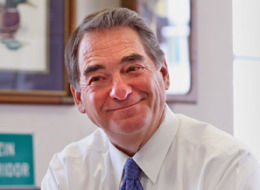
Fordham Dean William Michael Treanor (pictured) called Reed Smith's action unprofessional and disappointing. In an e-mail sent to students and faculty (republished by Above the Law), he informed them of the news and of his decision to impose the ban... [MORE]

Sphere: Related Content

Posted by Robert J. Ambrogi on August 13

Fuente:
Difunde , comenta  libremente  este artículo
.
Saludos
Rodrigo González Fernández
Diplomado en "Responsabilidad Social Empresarial" de la ONU
Diplomado en "Gestión del Conocimiento" de la ONU
 
www.consultajuridica.blogspot.com
www.el-observatorio-politico.blogspot.com
www.lobbyingchile.blogspot.com
www.calentamientoglobalchile.blogspot.com
www.respsoem.blogspot.com
Teléfono: CEL: 93934521
e-mail: rogofe47@gmail.com
CONSULTAS, ASESORIAS Y CURSOS A NIVEL NACIONAL E INTERNACIONAL PARA EMPRESAS, OTEC-OTIC,UNIVERSIDADES .CENTROS DE ESTUDIOS EN LIDERAZGO; RSE ; LOBBY; CALENTAMIENTO GLOBAL; ENERGIAS RENOVABLES; EMPRESA FAMILIAR
Santiago- Chile

A Marketer's Guide to Alternative Billing Methods

A Marketer's Guide to Alternative Billing Methods

Susan Van Dyke, alternative billingClients are inquiring about alternative fees, which leave most law firms flummoxed.  Hourly billing is all that many law firms are familiar with. Now Susan Van Dyke, the president of the Vancouver Chapter of the Legal Marketing Association, demystifies several alternative billing models:

  • Blended rates
  • Capped fees
  • Contingency fees
  • Fixed fees
  • Retainers
  • Success fee

"American lawyers and firms are now undeniably called upon to introduce more creative approaches to billing by in-house legal departments," she writes on the LawMarketing Portal. "A few firms have jumped aboard and, further yet, some will be paid bonuses on positive outcomes, rewarding the creative and efficient."

Alternative fees are the bugaboo of law firm economics. Research by ACC/Serengeti and by Incisive Legal Intelligence show that the billable hour is firmly entrenched – not just by law firms, but by corporate clients as well. The research shows that clients may rattle their sabers about alternative fees, but they ultimately are satisfied with a discount on hourly fees.

"After many years of mumbling by lawyers and clients alike, one must wonder: will we look beyond the billable hour in light of the current economic bellyaching and slashed budgets of virtually every U.S. corporate legal department and many Canadian clients?"

Get the whole story on the LawMarketing Portal at www.lawmarketing.com 


Tags:
Trackbacks (0) Links to blogs that reference this article
Fuente:
Difunde , comenta  libremente  este artículo
.
Saludos
Rodrigo González Fernández
Diplomado en "Responsabilidad Social Empresarial" de la ONU
Diplomado en "Gestión del Conocimiento" de la ONU
 
www.consultajuridica.blogspot.com
www.el-observatorio-politico.blogspot.com
www.lobbyingchile.blogspot.com
www.calentamientoglobalchile.blogspot.com
www.respsoem.blogspot.com
Teléfono: CEL: 93934521
e-mail: rogofe47@gmail.com
CONSULTAS, ASESORIAS Y CURSOS A NIVEL NACIONAL E INTERNACIONAL PARA EMPRESAS, OTEC-OTIC,UNIVERSIDADES .CENTROS DE ESTUDIOS EN LIDERAZGO; RSE ; LOBBY; CALENTAMIENTO GLOBAL; ENERGIAS RENOVABLES; EMPRESA FAMILIAR
Santiago- Chile

Tauzin's Pharma Lobbying Efforts "Blessed" By White House

Tauzin's Pharma Lobbying Efforts "Blessed" By White House

digg Share this on Facebook Huffpost - Tauzin's Pharma Lobbying Efforts "Blessed" By White House stumble reddit del.ico.us ShareThisRSS


First Posted: 08- 4-09 12:31 PM   |   Updated: 08- 4-09 12:47 PM

I Like ItI Don't Like It
Retweet this story!
Trauzin

In today's Los Angeles Times Tom Hamburger reports on the extent to which former Louisiana Congressman Billy Tauzin has managed to integrate himself, and the interests of the lobbying group he heads -- the Pharmaceutical Researchers and Manufacturers Association (PhRMA) -- into the health care debate. The Times piece practices a studied neutrality, but I can't see how any proponent of meaningful health care reform can possibly read this piece and not conclude that President Barack Obama has essentially given away the store:

As a candidate for president, Barack Obama lambasted drug companies and the influence they wielded in Washington. He even ran a television ad targeting the industry's chief lobbyist, former Louisiana congressman Billy Tauzin, and the role Tauzin played in preventing Medicare from negotiating for lower drug prices.


Since the election, Tauzin has morphed into the president's partner. He has been invited to the White House half a dozen times in recent months. There, he says, he eventually secured an agreement that the administration wouldn't try to overturn the very Medicare drug policy that Obama had criticized on the campaign trail.

"The White House blessed it," Tauzin said.

Yikes! What's been blessed? Something that reeks with the acrid aroma of a Faustian bargain. The pharamaceutical industry "has pledged $80 billion in cost savings over 10 years to help pay for it." What did Tauzin get in return?

For his part, Tauzin said he had not only received the White House pledge to forswear Medicare drug price bargaining, but also a separate promise not to pursue another proposal Obama supported during the campaign: importing cheaper drugs from Canada or Europe. Both proposals could cost the industry billions, undermine its ability to develop new cures and, in the case of imports, possibly compromise safety, industry officials contend.

Of course, Medicare drug price bargaining is precisely the sort of thing that would benefit actual health care customers. In essence, this reads as a deal by which corporate interests help to hurdle the political obstacle of deficit cost control without creating an effective bill. The White House can claim credit for "reform," while alleviating the actual health care impact on families gets kicked down the road, once again.

PhRMA has spent huge sums of money lobbying Congress for a health care bill that will ensure their profitability. In the first quarter of this year, Tauzin's outfit spent $6,910,000 in pursuit of the bill they wanted. They matched that amount in the second quarter with another $6,150,000. The efforts seem to be paying off!

[Would you like to follow me on Twitter? Because why not? Also, please send tips to tv@huffingtonpost.com -- learn more about our media monitoring project here.]

Get HuffPost Politics On Facebook and Twitter!

Fuente:
Difunde , comenta  libremente  este artículo
.
Saludos
Rodrigo González Fernández
Diplomado en "Responsabilidad Social Empresarial" de la ONU
Diplomado en "Gestión del Conocimiento" de la ONU
 
www.consultajuridica.blogspot.com
www.el-observatorio-politico.blogspot.com
www.lobbyingchile.blogspot.com
www.calentamientoglobalchile.blogspot.com
www.respsoem.blogspot.com
Teléfono: CEL: 93934521
e-mail: rogofe47@gmail.com
CONSULTAS, ASESORIAS Y CURSOS A NIVEL NACIONAL E INTERNACIONAL PARA EMPRESAS, OTEC-OTIC,UNIVERSIDADES .CENTROS DE ESTUDIOS EN LIDERAZGO; RSE ; LOBBY; CALENTAMIENTO GLOBAL; ENERGIAS RENOVABLES; EMPRESA FAMILIAR
Santiago- Chile

Tuesday, August 04, 2009

Jobless seek future in franchising


As Elizabeth Winterhalter and her husband, Monte, packed up their house in Glastonbury, Conn., for their move to McLean, they were eager and anxious about trading the pain of unemployment for the promise and peril of something they had never tried before — running a franchise.

"[Monte] was managing 1,200 employees at the JCPenney's East Coast office in Manchester and worked for them for 35 years. He did everything for them … but then in January they let him go. That was the only job he ever had; he started as a supervisor and then worked his way up to the head guy. Losing his job was a shock," said Mrs. Winterhalter, who also found out in February that her teaching job would be reduced to part time.

"You think, 'What can we do?' and we decided to turn the whole thing around … We knew we would have to move, we had a big house and expensive house payments," she said.

The move is taking Mr. and Mrs. Winterhalter more than 300 miles to a rental house in McLean, where they will live while trying to negotiate a lease location for their Red Mango franchise, which will serve healthy nonfat frozen yogurt in the Washington area.

Franchising has become a popular trend among those recently faced with unemployment because of cutbacks due to the recession, a fate that both Mr. and Mrs. Winterhalter experienced in the Hartford suburb.

Alisa Harrison, vice president of communications and marketing at the International Franchise Association, located in Washington, said, "Generally during recessions we see an increased interest in people wanting to get into franchising."

But what's most interesting is that there is "an increase in the experience and quality of people because they are often highly-skilled workers who have been recently laid off … Our members are saying that they're getting an increased level of experienced applicants, people who are more serious," she said.

In a 2008 report for the International Franchise Association Educational Foundation, PricewaterhouseCoopers said that in 2005, "business-format franchises operated 773,435 establishments in the United States," a number that grew to 847,246 by 2007.

Similarly, the number of full-time and part-time jobs provided by franchised businesses increased from 9 million to 9.8 million in the same period.

Although these numbers were expected to decline slightly in 2008-2009 due to the recession, the decline in the number of establishments and output were predicted to be less substantial than the growth seen in 2007-2008.

Fuente:
Difundan libremente  este artículo
CONSULTEN, OPINEN , ESCRIBAN .
Saludos
Rodrigo González Fernández
Diplomado en "Responsabilidad Social Empresarial" de la ONU
Diplomado en "Gestión del Conocimiento" de la ONU
 
www.consultajuridica.blogspot.com
www.el-observatorio-politico.blogspot.com
www.lobbyingchile.blogspot.com
www.calentamientoglobalchile.blogspot.com
www.respsoem.blogspot.com
Oficina: Renato Sánchez 3586 of. 10
Teléfono: OF .02- 2451113 y  8854223- CEL: 93934521
e-mail: rogofe47@mi.cl
Santiago- Chile
Soliciten nuestros cursos de capacitación  y consultoría en LIDERAZGO -  GESTION DEL CONOCIMIENTO - RESPONSABILIDAD SOCIAL EMPRESARIAL – LOBBY – ENERGIAS RENOVABLES   ,  asesorías a nivel nacional e  internacional y están disponibles  para OTEC Y OTIC en Chile

Adam Smith, Esq.

Adam Smith, Esq.
AdamSmithEsq.com

August 2009
New York City

Print and Mobile-friendly version

Forward this email


In this issue:

Section 1   Welcome
Section 2   Recap of key articles

Section 3   Special newsletter-only article
Section 4   Individual profile
Section 5   Picture from New York
Adam Smith, Esq., ...an inquiry into the economics of law firms | Bruce MacEwen, Creator & Host


rodrigo gonzalez fernandez
director
consultajuridica

Dear rodrigo:

Welcome to the July 2009 edition of the "Adam Smith, Esq." monthly newsletter. 


The question on everyone's mind is whether we are seeing any "green shoots" or not.


Obviously, much of the answer depends on where you sit.  Many smaller and mid-size firms, or the offices of larger firms outside major financial centers, never suffered from the meltdown in the way the classic capital-markets-oriented firms did.  (Famously, Cravath, always the poster child for a New York-centric practice, experienced a reported drop in PPP of 24%.)


If you believe that clients are finally serious about seeking to spend less overall on outside counsel, then they have a limited range of choices.  I suspect we're seeing all of the following kick in:

  • Seeking discounts and other forms of rate reductions from existing "preferred providers."
  • Going to lower-rate firms (thus the generally happier experience of mid-size firms).
  • And dispensing with what could be viewed as "discretionary" legal spending entirely--such as certain litigation.

The important question for the longer run is whether these new forms of behavior will endure.  And since you asked, in this newsletter you will find my views.


Most importantly, if you have thoughts, comments, or suggestions about this, please let me know.  The editor & publisher is always in.

Sincerely Yours,
bjmsig2.gif

Bruce MacEwen


Recap of Key Articles


The Happiness of Your Lawyers  uses the annual American Enterprise Institute lecture, delivered last march by Charles Murray, to ask what lessons can be drawn from the European social model for our high-performance law firms.  The moral may be that there are unintended consequences if you try too hard to "take the trouble out of things."


21st Century Armageddon  takes square and I devoutly hope tellingly successful aim at a rather hysterical article proclaiming that a firm's decision to suspend its summer associate program for a year was, well, you can tell from the title.  But my column is really more about new models for associate career paths.  My hypothesis is that firms that adopt models different from the century-old Cravath System will never go back.


Law & Surgery, an unorthodox column, asks if you've ever had an experience, as a practicing lawyer, akin to that fictionally described by Ian McEwan as something his protagonist in his recent novel Saturday experiences.


Upside of the Downturn is more or less a capsule book review of Geoff Colvin's recently published book of the same name, suggesting 10 things managers (that would be you) can do during a downturn to position your firm more strongly for the recovery.  Hint:  None of them is expressly about cost-cutting.


A Conversation with Tomasz Wardynski  introduces you to a strong and deeply engaging character who founded one of Warsaw's leading law firms.  The moral?  "Life is not a fairy tale."


Grim Reaper as Optimist-in-Chief  explores the changing and delicate balance between your roles as heavy-handed and essentially solo bearer of terminally bad news to staff, associates, and partners, with your indispensable role as keeper of the flame of faith in the firm's ever-greater future.  This is why you get paid.


Thus concludes this month's recap of articles.


Special Newsletter Article:  What Will Be The Lasting Repercussions on "The Other Side"?


Much ink has been spilled on whether or not we're seeing any "green shoots" in the economy.  As faithful readers know, I'm not buying that theory.

Above, I wrote that:

If you believe that clients are finally serious about seeking to spend less overall on outside counsel, then they have a limited range of choices.  I suspect we're seeing all three kick in:

    • Seeking discounts and other forms of rate reductions from existing "preferred providers."
    • Going to lower-rate firms (thus the generally happier experience of mid-size firms).
    • And dispensing with what could be viewed as "discretionary" legal spending entirely--such as certain litigation.

Here's what I think about all that.

1.  

Discounts or other rate reductions without a fundamental rethinking of how law firms perform their various functions are an extremely short-sighted and (I would argue) unsustainable trend.  I have never advised a client to cut rates or offer discounts as I believe it teaches clients to behave badly.  

And while clients may claim they appreciate the reduction from (say) $450/hour to $400/hour, their memory will be very short and they will scream bloody murder if you try to go back to $450 from $400--and immediately forget their gratitude at giving them a break in the first place.  Also, arithmetically, perceptions work against you; the cut from $450 to $400 is a cut of 1/9th (11.1%) but the raise from $400 to $450 is a raise of 1/8th (12.5%)

The real problem with discounts, besides the quasi-esthetic objection that they display an utter lack of imagination or creativity either on behalf of the client or the firm, is that they train clients to expect discounts and in the process devalue your services.

Clients demands' for discounts and push-backs on such practices as billing for first and second year associates may, ultimately, force you to examine the question of what type of firm you are.  Who, that is to say, is your real target market? 

If you enjoyed the "rising tide" phenomenon of the first decade of the 2000's, when the compound annual growth rate of revenue of law firms tracked by the Citi Private Bank was nearly 11%/year--and if that was actually all you were experiencing--then you may have to face some difficult days of reckoning.

On the other hand, if--fortunate you--your firm's services seriously are worth a premium in good times and bad, then you need to have the courage of your convictions and stick to your published rate card, as it were.

The only certainty I can offer you on this score is that Mr. Market will tell you on which side of the divide you primarily stand.

2.

The most critical question in this entire debate over what the landscape will look like "on the other side" may be whether clients who have eaten the fruit of the forbidden middle-market firm tree will find that they're satisfied and stay there.  There are no a priori reasons, after all, why the quality of lawyering should be correlated with the cost of living in the firm's primary city.  

We may also see graduates from the nation's top-drawer law schools increasingly migrating towards cities not counted among the capital markets centers.  Why? 

  • The increasingly wide recognition that a $160,000 starting salary brings with it heavy billable hour and performance expectations.
  • The concomitant appeal of "work/life balance" options.
  • Willingness to put greater weight on "quality of life" considerations, as the pressure to aspire to succeed in the biggest pressure cookers of all comes to seem dated.
  • And most importantly, the ineluctable downward shift in the demand curve from top-tier firms in top-tier markets for new associates.  Sure, if you're Harvard (or Yale or Stanford or Columbia or ...) top of your class, the world will always be your oyster.  But if the market pushes everyone down one rung on the ladder, as it were, realism may become a virtue.

If this trends kicks in at noticeable scale, regional and middle-market firms may find themselves able to move readily up the talent food chain. 

Please understand something here:  Terrific lawyers have always broadly populated firms outside the AmLaw 50, 100, and 200, and have always populated cities of fewer than 1-million or 100,000 residents.  I know that and you know that.  My only point is that clients who have heretofore doubted that on general principles or simply never experienced that or never had the courage to reach outside the "safe" name-brand mainstream may at last discover it for themselves.

The counter-argument to this is that sophisticated and "premium" transactions and litigations are generally performed in major global legal and financial centers because that's where the highest-wattage brainpower tends to aggregate--and it's not just lawyers, but investment bankers, accountants, management consultants, and every other related profession requiring talent (graphic artists, marketers, etc.) 

I happen to believe that the ever-accelerated interconnectedness of our world has only increased, not decreased, the desirability and necessity of people congregating in places like New York, London, and Hong Kong.   But there's no copyrighting ideas and brilliant lawyering isn't limited only to certain geographic latitudes.


Quote of the month


By directing his industry in such a manner as its produce may be of the greatest value, he intends only his own gain, and he is in this, as in many other cases, led by an invisible hand to promote an end which was no part of his intention.  Nor is it always the worse for the society that it was no part of it. By pursuing his own interest he frequently promotes that of the society more effectually than when he really intends to promote it.

Adam Smith, The Wealth of Nations, 1776


The working of self-interest is generally beneficent, not because of some natural coincidence between the self-interest of each and the good of all, but because human institutions are arranged so as to compel self-interest to work in directions in which it will be beneficent.

Edwin Cannan, Economic Review, 1913


The invisible hand which guides men to promote ends which were no part of their intention, is not the hand of some god or some natural agency independent of human effort; it is the hand of the lawgiver, the hand which withdraws from the sphere of the pursuit of self-interest those possiblilities which do not harmonize with the public good.

Lionel Robbins, The Theory of Economic Policy in English Classical Political Economy 


3.


As an economist, I've often viewed litigation as essentially a zero-sum game, with, to be sure, a nice juicy cut for the lawyers.  If you start from that premise, then the decision whether or not to pursue a "discretionary" litigation (one not involving an existential threat to the business, or a non-negotiable reputational issue) should come down to a simple cost/benefit analysis.  

The question remains why litigation has not behaved in its classic counter-cylical fashion and risen up to save all our bacon. 

My operating hypothesis on this is that one major characterisitic of litigation that has changed since the last downturn is e-discovery.  And the implications of e-discovery are two-fold:  First, it obviously, vastly, increases costs before you even get to the courthouse (or summary judgment motion) door.   This is not an enticing prospect in this environment.   

But the second is, I believe, perhaps even stronger:  Given the rather shocking track record of people to spout off in emails in the most irresponsible, damning, and blissfully colorful ways, I suspect many clients are afraid that if they open the door to e-discovery they will discover they've invited snakes to their own garden party.
 
Your thoughts? 
 
Will we indeed see litigation recover to its "normal" level where it is the pursuit of business objectives by other means?  My instinct is that the remarkably sophisticated apparatus we have developed through which to deploy litigation, as war, as battle, as strategy, as tactic, as maneuver, as feint, is far too nuanced and powerful not to make a comeback.
 
But that's only an instinct.  I would truly be interested in your reflections, observations, and, yes, instincts.


So What Does This Mean?


There you have my thoughts on the key ingredients that will help determine what "the other side" may look like.


Taking them in incorrect order:

  • As for 3, the question whether litigation will come back, and at what scale, I believe it's only a matter of time before it does resume.  Clients' (and lawyers') aggressive instincts have not been bred out of the species, only temporarily suppressed because of a remarkably inhospitable environment at the moment.  But I stand ready to revise my views based on your comments.
  • As for 1, the question of whether discounts is the last word in creative billing alternatives, you have my view that it is an embarrassingly simple-minded distraction which does nothing to fundamentally advance the conversation we ought to be having with our clients about value:  How they perceive it, how we think we deliver it, and the conversation no one has launched yet in a serious way, which is attempting to get our arms around what clients think they mean by "quality" and what we think we mean.  [Hint:  According to JD Power, Lexus was the #1 highest-quality car brand in 2008, with 84 problems per 100 vehicles.  Overall, the card industry aveage was 108 problem sper 100 vehicles.  The point is not how tiny marginal differences can loom so large but that even for Lexus, zero defects is not a goal.  We might learn something from this.  Sometimes very very good indeed--but not perfect--is quite good enough.]
  • Finally, #2 is the Great Unknown.
    What will clients who have experienced the service of non-top-tier, non-capital-markets-centered firms choose to do? 
    Not to be reductionist about it, but they have three options:  Decide these firms do indeed serve their needs for all practical purposes, and permanently divert a large portion if not almost all of their spend in their direction.  Alternatively, continue to employ them for non-"bet the house" matters so long as there seem to be no major screw-ups.  And finally, return to the buying habits of the palmy boom days when "nobody ever got fired for hiring Skadden."  (I paraphrase, but you get the gist.)

I honestly do not know where clients will come out on this--nor, accordingly, where we will. 


But many of our future careers will be determined by how this works out.  And the response of individual firms, individual managing partners, executive committees, practice group and office leaders, partners and rising associates, and C-suite staff, will help determine how this works out.


We are not bystanders.


Comments or thoughts on this article?

The editor is always in.


  Profile of an Individual

Anthony Davis | Partner in Hinshaw & Culbertson LLP |  New York


I have known Anthony for a few years, and have particularly appreciated his perspective on New York and the US, since he's a Brit (educated at Cambridge [BA and MA]), as well as NYU (LLM), but one who is now thoroughly re-socialized as a New Yorker.


Anthony has an unusual perspective on and insight into what you might call the anthropology or the sociology of the legal profession, since his practice (as you'll see) focuses on how things can go wrong.


--Bruce


What I actually do (as opposed to my job description):


I am a lawyers' lawyer.  I advise law firms on every aspect of law firm management and risk management, with a strong emphasis on demonstrating how improved management systems translate directly into improved service to clients, client satisfaction and law firm profitability.  Most frequently this involves helping firms upgrade their client selection and client intake management policies and systems, but it also encompasses advising firms on calendar and docket systems, fee (especially alternatives to time charging), billing and collection policies, document management, every aspect of practice group and law practice management, and partner and associate compensation structures.  Since effective risk management often involves helping to insure that policies and procedures are understood and uniformly operated at every level of a law firm, I spend a great deal of time presenting professional responsibility and risk management continuing legal education programs.  I frequently act as an expert witness in disqualification, fee dispute and malpractice cases.  I also co-teach a course (Anatomy of Large Law Firms) at Columbia University School of Law and, in addition to occasional law review articles, write the regular bi-monthly Professional Responsibility column for the New York Law Journal.


Most memorable previous job I had:


I began my career as a practicing barrister in London, handling criminal matters, including the trial of a major fraud case at the Central Criminal Court (better known to Americans as the Old Bailey).


What I thought I'd do when I was growing up:


Become a latter day "Rumpole of the Bailey."


Why I ended up in the legal profession:


I envisaged a career as a trial lawyer because I thought I had some aptitude for public performance, but wasn't sure if I could make it as a theatrical actor.


Best aspect of my work:


Positive feedback from lawyers and law firms that they have been helped by my counsel.


Worst aspect of my work:


Time spent in airports and away from home.


Pivotal moment in my career:


In 1992, during the aftermath of the "Savings and Loan" crisis, the federal government sued the Kaye Scholer law firm and I wrote a column in the New York Law Journal the theme of which was in the form of a question: If one was a partner of a prominent law firm and was told that the government had frozen the firm's assets until claims against the firm had been resolved, wouldn't one wonder how this had come about and what might have been done to avoid the problem? For the first time in my awareness, I used the words "risk management" in print.  At least one person read my article because shortly afterward Professor Mary Daly called me to say that she had been invited to speak at a symposium on the Kaye Scholer case in Texas to be held the following spring, but since she was unable to attend she had suggested that I might be interested. But she warned me I would have to contribute a full-length law review article. I agreed, and attended the symposium, held at the South Texas School of Law, and indeed I turned my New York Law Journal piece into a full length article. By a series of twists and turns not necessary to relate, that article in turn ultimately led to the writing of the book, "Risk Management: Survival Tools for Law Firms" and its publication by the Law Practice Management Section of the ABA.


The writing of that book, and the efforts that followed to get the attention and interest of the insurers who write lawyers' professional liability insurance for lawyers and law firms, led me to the conclusion that it might indeed be possible to develop a full-time practice advising lawyers and law firms on issues relating to law practice generally, and specifically to risk management. Accordingly, in the mid 1990's I decided to embark on a significant career change, including moving to a law firm that was prepared to support my rather radical practice development scheme. Now, almost fifteen years later, I am at Hinshaw & Culbertson LLP, a national firm, and part of an entire practice group--Lawyers for the Profession®--that advises lawyers and law firms all over the United States and internationally on every aspect of the law governing lawyers.


Most surprising event in your career to date:


When I learned of the existence of the Association of Professional Lawyers ("APRL") – proving that there were other lawyers around the country with similar interests and practices to my own.


Most influential person(s) in your life:


My high school history teachers (if you have seen the play or movie "The History Boys," you will have an inkling of an idea), and my "Pupil Master" (the barrister with whom I did my mandatory apprenticeship at the English bar), the late Michael Hill, Q.C.


Dream job I'd have if I were independently wealthy:


Exactly what I do now.


Advice I'd give to a college student asking about going to law school:


If the reason you want to be a lawyer is because you believe it is a career that offers the opportunity to earn a substantial income, do something else as you will be very unhappy.  On the other hand, if you have some idea as to what you want to accomplish for other people by being a lawyer, go for it!


Best books I read in the past year or two:


Most thought provoking: "The Black Swan: The Impact of the Highly Improbable" by Nassim Nicholas Taleb.

.

Best book on a legal subject: "Eat What You Kill, The Fall of a Wall Street Lawyer" by Mitt Regan.


Historic figure I'd most like to have dinner wiDavis, Anthony E..jpgth:


Winston Churchill.


Favorite City:


Paris.


Favorite art form (performing or otherwise):


Music, especially Country and Western (favorite performer: Patty Griffin), and the music of Handel, Bach and Beethoven (favorite performer: New York Philharmonic).


Ten years from now, how will the legal industry have changed?:


Caveat: I have learned to be very humble when it comes to making predictions – I have never found a crystal ball that worked!  That said, I will venture some guesses: (i) The billable hour will not disappear, but it will progressively decrease as the preferred method of billing for legal services.  (ii) Leverage will cease to be the principal driver of law firm profitability.  Lawyers and firms will be profitable in direct proportion to the way in which they learn to work smarter, not  harder.  (iii) As a direct corollary to (i) and (ii), the most successful law firms will be those who hire only those associates they wish to retain permanently, that spend significant capital continually training the lawyers that they hire, and that reward based on competences acquired.  (iv) "Big Law" will survive, albeit with many fewer players.  (v) Boutique law firms with proven special expertise in their chosen arenas will flourish.


Globally, the predominance of the U.S. based law firms may be seriously threatened as a result of the ability of English and, probably other European law firms, to establish true multidisciplinary practices, to partner and share fees with nonlawyers and, to a lesser extent, to accept investment capital from nonlawyers, all as a result of the changing regulatory climate overseas.  The U.S. based firms are likely to be hamstrung by the U.S. state based regulatory system unless ways can be found that will permit the separate national regulation of law firms that operate in more than one state.


Anything else you want to add?:


If I have learned only one principle from teaching and practicing law in the United States for 35 years, it is that the debate about whether the practice of law is predominantly a profession or a business is utterly misplaced.  The practice of law is both a business and a profession.  Lawyers and law firms are most effective in serving clients and in generating an appropriate livelihood when they adopt good business practices that conform to the applicable laws and rules of professional conduct.


   Nominations?
If you know someone you think would be fascinating to profile here, please let us know

The only rule is that you can't nominate yourself.  (But surely you could recruit a shill to do so anonymously, so go for it if you'd like.)


  Picture From New York


Van Cortlandt Park, in the Bronx, is the fourth largest park in New York City, with 1,146 acres. 


It contains the Bronx's oldest building, the Van Cortlandt House (1748) as well as the oldest municipal golf course in the United States, the Van Cortlandt Golf Course (founded 1895).


Among other things, it's world-famous among cognoscenti for its cross-country running course, a rugged path that traditionally hosts the national cross-country championships and is virtually a shrine to metropolitan area runners.


VanCortlandtParkEntrance.jpgThe terrain is the result of millions of years of geologic activity with steep ridges the only remnants of a once formidable mountain chain long since broken down by glaciers passing and plain old erosion.


When the Dutch landed in New York (New Amsterdam to them), the land where the park now lies was inhabited by the Weckquaesgeek Indians, who sold much of it to the Dutch West India Company in 1639.  In turn, the company solid it to Netherlands native Adriaen Van der Donck in 1646.  When he died in 1655, the Indians attacked and re-took the park, forcing the Dutch to retreat to New Amsterdam.


In 1693, the Englishman Frederick Philipse acquired the property from Van der Donck's widow and proceeded to sell most of what is today's park to his son-in-law (who would subsequently become a Mayor of New York), Jacobus Van Cortlandt.  The family would live on and farm the land for nearly the next 200 years.


New York City finally took title to the land in 1888.


The final stop on the uptown #1 subway line (the 7th Avenue/Broadway local from the original IRT system built in 1904) is 241st Street and Van Cortlandt Park.


Fuente:
Difundan libremente  este artículo
CONSULTEN, OPINEN , ESCRIBAN .
Saludos
Rodrigo González Fernández
Diplomado en "Responsabilidad Social Empresarial" de la ONU
Diplomado en "Gestión del Conocimiento" de la ONU
 
www.consultajuridica.blogspot.com
www.el-observatorio-politico.blogspot.com
www.lobbyingchile.blogspot.com
www.calentamientoglobalchile.blogspot.com
www.respsoem.blogspot.com
Oficina: Renato Sánchez 3586 of. 10
Teléfono: OF .02- 2451113 y  8854223- CEL: 93934521
e-mail: rogofe47@mi.cl
Santiago- Chile
Soliciten nuestros cursos de capacitación  y consultoría en LIDERAZGO -  GESTION DEL CONOCIMIENTO - RESPONSABILIDAD SOCIAL EMPRESARIAL – LOBBY – ENERGIAS RENOVABLES   ,  asesorías a nivel nacional e  internacional y están disponibles  para OTEC Y OTIC en Chile